The Most Beautiful Villages of the Dordogne (and Where to Stay)
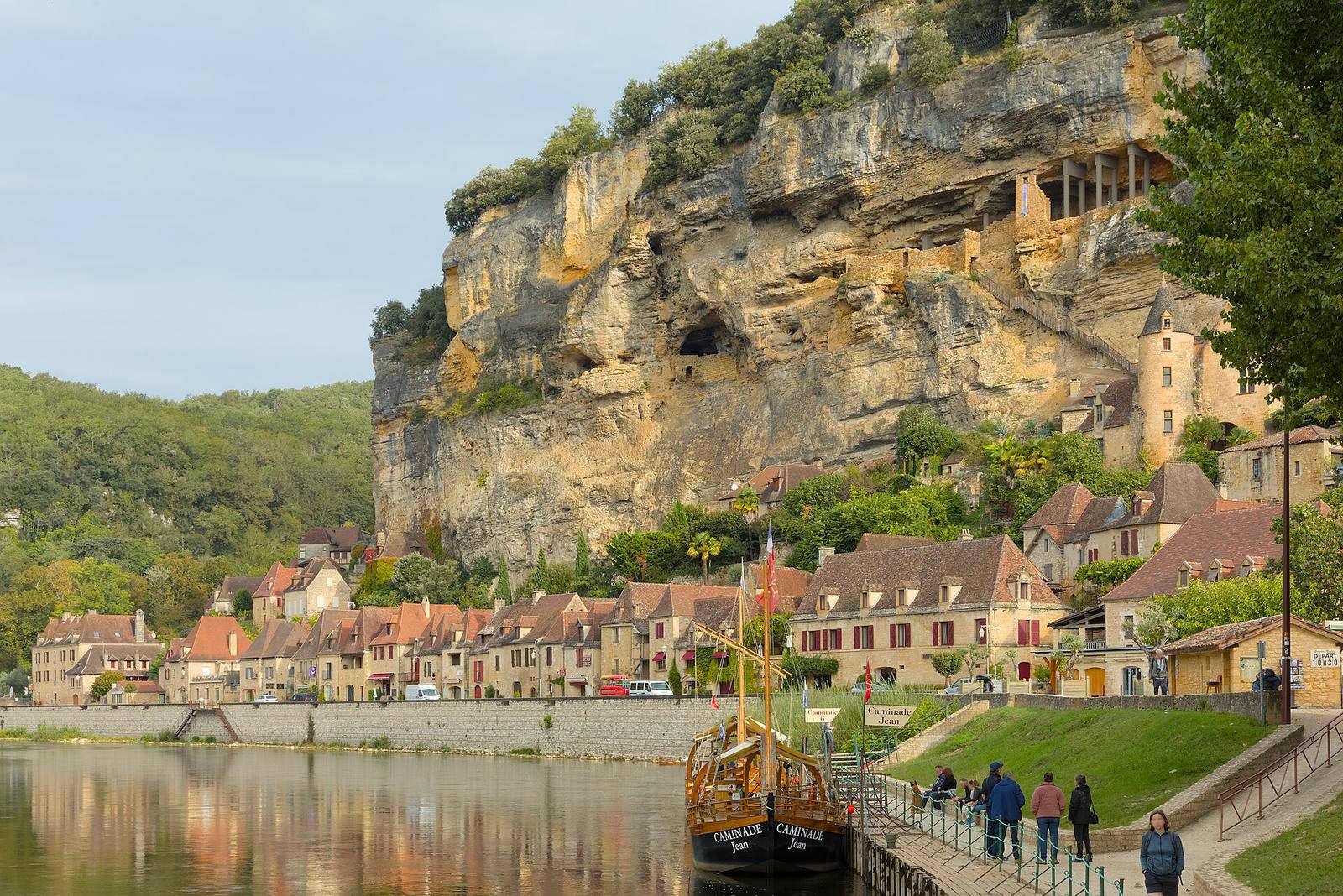
La Roque-Gageac on the Dordogne. Photo: Benjamin Smith, CC BY-SA 4.0, via Wikimedia Commons
Ten of the villages on France's official Plus Beaux Villages de France list are in the Dordogne, and most are within about 45 minutes of Sarlat. Four line the river below their castles and cliffs, three more are on or near the Vézère, and Belvès and Monpazier are down to the south. Only Saint-Jean-de-Côle, up in the Périgord Vert, needs a day to itself. Sarlat isn't on the list (it's a town, not a village), but it's the obvious base for the river villages.
If you only have a day or two
Spend your first day on the river at La Roque-Gageac, Domme, Castelnaud and Beynac, all about 15 minutes from Sarlat and from each other. With a second day, follow the Vézère through Saint-Amand-de-Coly, Saint-Léon-sur-Vézère and Limeuil, or head south to Belvès and Monpazier on a market morning. Saint-Jean-de-Côle is an hour and 40 minutes north of Sarlat, so save it for another trip and pair it with Brantôme.
The Dordogne valley: La Roque-Gageac, Domme, Castelnaud and Beynac
If you see only one part of the Dordogne, make it this one. The four villages are a short drive apart, Castelnaud looks straight across the river at Beynac, and the gardens of Marqueyssac are on the same road.
La Roque-Gageac
The houses here are squeezed between a south-facing cliff and the river, roofed in stone slabs (lauzes) or brown tiles. Climb the stairs up the cliff face to the old fort cut into the rock for the view down the valley. Back at the water's edge, traditional flat-bottomed gabarres, the boats that once carried cargo down the river, take visitors out from place du 8 Mai. Parking is paid in season, and in summer it pays to come early.
Marqueyssac
The hanging gardens on the ridge above La Roque-Gageac make one of the best walks in the valley. More than 6 km of paths wind through 150,000 box plants, all clipped by hand, to a belvédère high above the river. Allow an hour and a half. The gardens are open every day of the year, dogs on leads are welcome, and on Thursday evenings in July and August the paths are lit by candles (book ahead).
Domme
Domme is a royal bastide, founded in 1281 on a cliff 150 metres above the Dordogne, and the view is the reason to come. Walk out to place du Belvédère and the whole valley opens up below you, with several of the other villages in sight. Under the town, the Grotte de Domme is visited on a 45-minute guided tour, with a panoramic lift back up (not suitable for pushchairs). Thursday morning is market day, and there are paid car parks inside the walls and just outside.

Castelnaud-la-Chapelle
If you have children with you, start here. The castle is a museum of medieval warfare, with about 200 weapons and pieces of armour and trebuchet demonstrations, and it's open every day of the year. Nearby, the Château des Milandes was Josephine Baker's home and now tells her story, with gardens listed as a Jardin Remarquable.
Beynac-et-Cazenac
Beynac's castle stands right on the edge of its cliff above the river, with steep lanes of pale stone houses below. If it looks familiar, it has starred in Les Visiteurs II, Jeanne d'Arc and The Last Duel. A visit takes about an hour, and dogs on leads are welcome. There's a car park at the top, a couple of minutes from the castle, or you can park by the river and walk up, which takes about 15 minutes.

A day on the river: start at La Roque-Gageac before the car parks fill, then walk the gardens at Marqueyssac, five minutes away. Drive up to Domme for lunch with a view and spend the afternoon at Castelnaud's castle. Finish in Beynac in the early evening, when the lanes are quieter and, in summer, the castle is still open. Better still, hire a canoe for one stretch and see the castles from the water. It's a full day, so split it over two if you can.
The Vézère and the confluence: Saint-Amand-de-Coly, Saint-Léon-sur-Vézère and Limeuil
The Vézère valley is best known for its prehistoric sites, which are on the UNESCO World Heritage list. These three villages make a good day out, driving from north to south.
Saint-Amand-de-Coly
A small village between two wooded valleys, not far from Lascaux. You come for the abbey church, a 30-metre Romanesque church built to be defended and reckoned the finest of its kind in the Périgord. A trail of illustrated boards takes you round the abbey and the village, and there's a food market on Tuesdays in summer.
Saint-Léon-sur-Vézère
Saint-Léon sits in a tight loop of the Vézère below the Côte de Jor. It was once a river port, and you can still eat by the water. The 12th-century church has frescoes and such good acoustics that the Festival du Périgord Noir holds summer concerts there, so check the programme before you go. Along the river, Le Conquil has troglodyte dwellings you can visit.
Limeuil
Limeuil stands on a promontory where the Dordogne and the Vézère meet. Leave the car at the bottom and walk up through the narrow lanes (carreyrous) and old fortified gateways to the Jardins Panoramiques, laid out where the castle once stood, for the view over the confluence. The gardens open from April to early November. Afterwards, head down to the old port, where children can paddle and watch the canoes go by.

The south: Belvès and Monpazier
These two are about 20 minutes apart and go well together, ideally on market day: Saturday morning in Belvès, Thursday morning in Monpazier.
Belvès
Belvès sits on a rocky spur above the Nauze valley and is known as the town of seven bell towers. People lived in its troglodyte dwellings until the 18th century, and you can visit them with a guide all year. The 15th-century market hall stands on 23 pillars, one of which served as a pillory.
Monpazier
Edward I of England founded Monpazier in 1284, and it's often called the model bastide: a grid of straight streets around place des Cornières, a big arcaded square. The old market hall still has its grain measures. The Thursday market starts early, and children will enjoy the Bastideum, which tells the town's story with games and puzzles. Parking is free.

The north: Saint-Jean-de-Côle
Saint-Jean-de-Côle is the odd one out, an hour and 40 minutes north of Sarlat, so make a day of it with Brantôme, about 25 minutes away. Its ochre houses have brown tiled roofs, the Château de la Marthonie looks over place Saint-Jean, and a Gothic bridge crosses the Côle. Come on a Wednesday morning for the organic market under the old hall, or on the second weekend of May for the Floralies plant fair. The tourist office has audio guides in English.

When to go
May, June and September are the best months: the castles and gardens are open with long hours, and you can still park. In July and August the best-known villages are very busy and parking is hard by mid-morning, so start early or save Beynac for the evening. Winter is quiet and parking is easy. The castles at Castelnaud and Beynac and the gardens at Marqueyssac open every day, though Limeuil's gardens and the gabarres don't run.
Village market days
- Tuesday (summer): Saint-Amand-de-Coly
- Wednesday: Saint-Jean-de-Côle (organic)
- Thursday: Domme and Monpazier
- Saturday: Belvès
- Free parking: Saint-Amand-de-Coly, Monpazier and Saint-Jean-de-Côle
Where to stay
Our gîtes are spread through the countryside near each group of villages, so pick the area you most want to explore. Every one below has a pool to come back to after a day of castles and lanes, and you book direct with the host, with no booking fees.
For the Dordogne valley and Marqueyssac
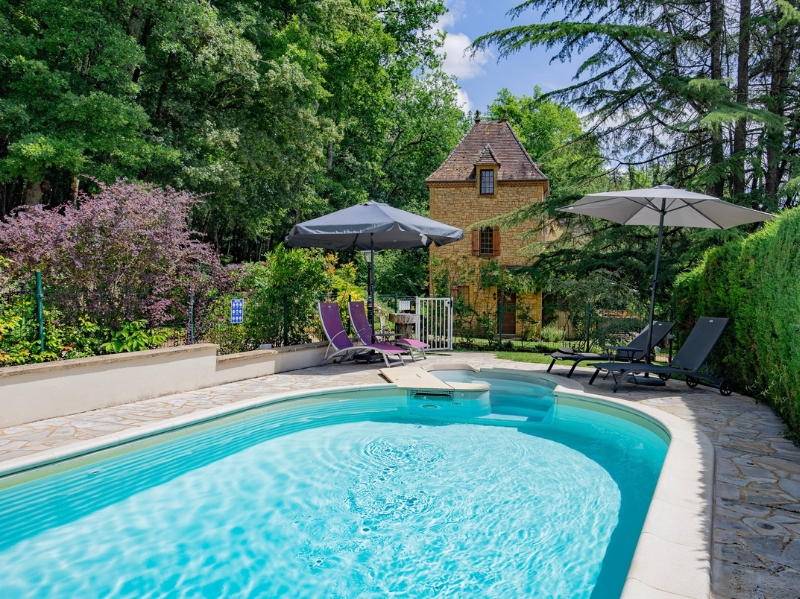
Le Coutal
A family house for 6 with its own pool and valley views. Beynac is about 20 minutes away, with Castelnaud and La Roque-Gageac not much further.

Les Fourches
Bring the dog. A single-storey gîte for 6 with a fenced salt-water pool, about half an hour from Domme and La Roque-Gageac, and close to Rocamadour too.
For Belvès and Monpazier

Domaine de La Banne
A converted barn for 6 on 7 hectares with a heated salt-water pool, for adults and children of 13 and over. The hosts say it's a 25-minute walk along the lanes to Belvès's Saturday market.

La BelleView
A gîte for 4 with a heated pool and a hot tub, good for a couple or small family. Monpazier and the bastides are about half an hour away.
For the Vézère and Limeuil

Gîte Alors – Chez Vézère
An apartment for 4 in Les Eyzies, so you can walk to the shops and restaurants, with a shared pool. Saint-Léon is about 15 minutes away.

Chestnut Cottage
A 300-year-old stone farmhouse for a group of 8 to 10, on a 50-acre estate with a big heated pool. Saint-Léon is about 20 minutes, Limeuil half an hour.

LD les Charmettes
Good value for two couples (adults only), with a private pool heated to at least 26°C. Saint-Léon is about 35 minutes away, and pets are allowed.

Menabilly Cottage
A one-bedroom cottage for a couple, adults only, with a shared heated pool, about half an hour from Limeuil.
For Saint-Jean-de-Côle

Lannet
A family gîte for 4 with a pool and a fenced garden, and pets are allowed. Brantôme is about 15 minutes away, Saint-Jean-de-Côle about 35.

La Grange Montante
A converted barn in a hamlet in the Périgord-Limousin regional park, for a couple who want somewhere quiet (4 with the sofa bed), with sole use of the pool. Saint-Jean-de-Côle is about 50 minutes.
Frequently asked questions
Can I see the villages without a car?
Only some of them. Belvès has a railway station about 15 minutes' walk from the centre, and in summer Saint-Léon-sur-Vézère is on a regional bus route. For the valley villages you really need a car or a bike, though you can see Beynac and La Roque-Gageac from the river by canoe or gabarre.
Which villages are worth visiting in winter?
All of them are lived in all year, and parking is much easier. Castelnaud's castle, Beynac's castle and the gardens at Marqueyssac open every day, with shorter hours, but Limeuil's gardens and the gabarres close for the winter.
Ready to plan your French escape?
Browse our hand-picked gîtes and villas across France — book directly with owners, no booking fees.
Browse all gîtes in Dordogne